Welcome to the future of technology—where data lives in the sky and businesses scale without limits. Cloud computing has revolutionized how we store, access, and manage information. Let’s dive into what makes it so powerful.
What Is Cloud Computing and Why It Matters

Cloud computing refers to the delivery of computing services—including servers, storage, databases, networking, software, analytics, and intelligence—over the internet (“the cloud”) to offer faster innovation, flexible resources, and economies of scale. Instead of owning physical data centers or servers, companies can rent access to anything from applications to storage from a cloud service provider.
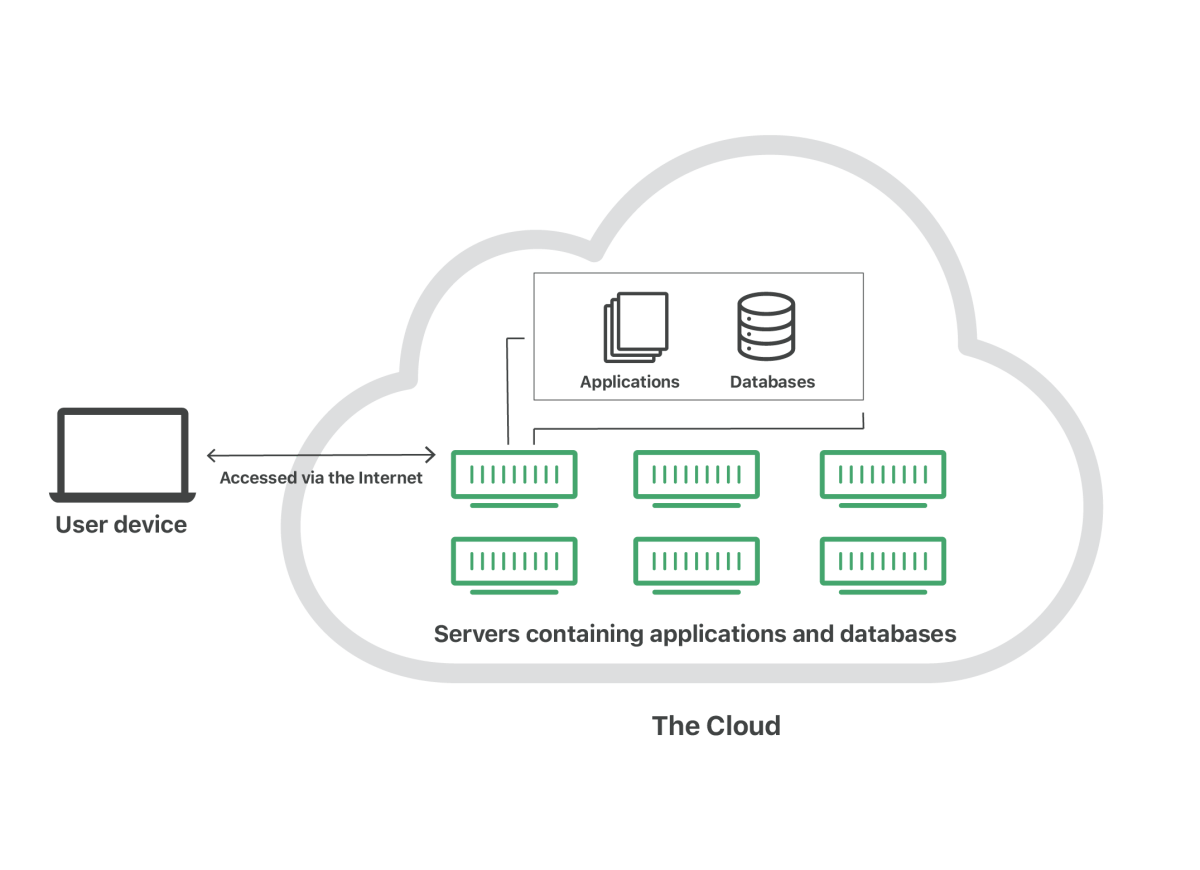




Defining Cloud Computing
At its core, cloud computing is about on-demand access to a shared pool of configurable computing resources. These resources can be rapidly provisioned and released with minimal management effort or service provider interaction. The National Institute of Standards and Technology (NIST) defines cloud computing with five essential characteristics: on-demand self-service, broad network access, resource pooling, rapid elasticity, and measured service.
On-demand self-service allows users to unilaterally provision computing capabilities as needed.Broad network access means services are available over the network and accessed through standard mechanisms.Resource pooling enables providers to serve multiple customers from the same physical resources using multi-tenant models.Rapid elasticity allows resources to be scaled up or down quickly.Measured service ensures that resource usage can be monitored, controlled, and reported.
.”Cloud computing is not just a technology shift; it’s a business transformation.” — Satya Nadella, CEO of Microsoft
Historical Evolution of Cloud Computing
The concept of cloud computing dates back to the 1960s when J.C.R.Licklider envisioned an interconnected network where everyone could access data and programs from anywhere.The term “cloud” was first used in the context of telecommunications in the 1990s to describe the complex infrastructure of networks.However, the modern era of cloud computing began in 2006 when Amazon launched Amazon Web Services (AWS), offering scalable, pay-as-you-go computing resources..
Since then, major players like Microsoft Azure, Google Cloud Platform (GCP), and IBM Cloud have entered the market, transforming cloud computing into a multi-billion dollar industry. Today, cloud computing underpins everything from streaming services like Netflix to enterprise resource planning (ERP) systems used by Fortune 500 companies.
Types of Cloud Computing Services
Cloud computing is not a one-size-fits-all solution. It comes in various forms, each tailored to different business needs and technical requirements. The three primary models are Infrastructure as a Service (IaaS), Platform as a Service (PaaS), and Software as a Service (SaaS). Understanding these models is crucial for selecting the right cloud strategy.
Infrastructure as a Service (IaaS)
IaaS provides virtualized computing resources over the internet. It offers the most control and flexibility for businesses that want to manage their own operating systems, applications, and data while offloading hardware maintenance to the provider. Examples include virtual machines, storage, and networking components.
Popular IaaS providers include Amazon EC2, Microsoft Azure Virtual Machines, and Google Compute Engine. These platforms allow organizations to scale infrastructure dynamically based on demand, reducing the need for large upfront capital investments.
- High degree of customization
- Ideal for startups and enterprises needing full control
- Cost-effective for variable workloads
Platform as a Service (PaaS)
PaaS provides a platform allowing customers to develop, run, and manage applications without dealing with the underlying infrastructure. It’s particularly useful for developers who want to focus on coding rather than server management. PaaS environments typically include development tools, database management systems, and middleware.
Examples include Google App Engine, Microsoft Azure App Services, and Heroku. These platforms streamline the development lifecycle, enabling faster deployment and easier collaboration across teams. For instance, a team building a mobile app can use PaaS to automate testing, staging, and production environments.
“PaaS removes the complexity of infrastructure so developers can innovate faster.” — Google Cloud
Software as a Service (SaaS)
SaaS delivers software applications over the internet on a subscription basis. Users access the software via a web browser, eliminating the need for installation, maintenance, or updates. Common examples include Google Workspace, Microsoft 365, Salesforce, and Dropbox.
SaaS is ideal for businesses looking for ready-to-use solutions with minimal IT overhead. It supports remote work, ensures automatic updates, and scales easily with user count. According to a report by Gartner, SaaS is the largest segment of the cloud market, expected to reach $232 billion in 2024.
- No installation or maintenance required
- Accessible from any device with internet
- Regular updates and security patches included
Deployment Models in Cloud Computing
Not all clouds are the same. Depending on organizational needs, security requirements, and compliance regulations, businesses can choose from different deployment models: public cloud, private cloud, hybrid cloud, and multi-cloud. Each model offers unique advantages and trade-offs.
Public Cloud
The public cloud is owned and operated by third-party cloud service providers who deliver computing resources over the internet. These resources are shared among multiple organizations (tenants), making it cost-effective and scalable. Major providers include AWS, Azure, and GCP.
Public clouds are ideal for web-based applications, data analytics, and startups due to their low entry cost and high scalability. However, they may raise concerns about data sovereignty and regulatory compliance in certain industries like finance and healthcare.
- Lower costs due to shared infrastructure
- High scalability and global reach
- Managed by the provider
Private Cloud
A private cloud is dedicated to a single organization and can be hosted on-premises or by a third-party provider. It offers greater control, security, and customization, making it suitable for enterprises with strict regulatory requirements or sensitive data.
Industries such as banking, government, and defense often opt for private clouds to ensure compliance with data protection laws like GDPR or HIPAA. While more expensive than public clouds, private clouds provide predictable performance and enhanced isolation.
“Private cloud gives enterprises the agility of the cloud with the control of on-premises infrastructure.” — IBM Cloud
Hybrid and Multi-Cloud Strategies
Hybrid cloud combines public and private clouds, allowing data and applications to be shared between them. This model offers flexibility—using the public cloud for non-sensitive workloads and the private cloud for critical operations. For example, a company might run customer-facing apps on AWS while keeping internal HR systems on a private cloud.
Multi-cloud, on the other hand, involves using services from multiple public cloud providers. This avoids vendor lock-in, improves redundancy, and leverages best-in-class services from different vendors. A business might use AWS for machine learning, Azure for integration with Microsoft tools, and GCP for data analytics.
- Hybrid: Best of both worlds
- Multi-cloud: Avoids dependency on a single provider
- Increases resilience and performance
Benefits of Cloud Computing for Businesses
Cloud computing has become a cornerstone of digital transformation. Its benefits extend beyond cost savings to include agility, innovation, and global reach. Organizations of all sizes—from small startups to multinational corporations—are leveraging the cloud to stay competitive.
Cost Efficiency and Scalability
One of the most compelling advantages of cloud computing is its pay-as-you-go pricing model. Instead of investing millions in hardware and data centers, businesses only pay for the resources they use. This reduces capital expenditure (CapEx) and shifts it to operational expenditure (OpEx), improving cash flow.
Scalability is another key benefit. With cloud computing, companies can instantly scale up during peak demand (like Black Friday sales) and scale down during off-peak periods. This elasticity ensures optimal performance without over-provisioning.
- No upfront hardware costs
- Pay only for what you use
- Scale resources in real time
Enhanced Collaboration and Remote Work
The rise of remote work has been accelerated by cloud computing. Tools like Microsoft Teams, Slack, and Google Meet rely on cloud infrastructure to enable seamless communication and collaboration across geographies. Employees can access files, applications, and databases from any device with an internet connection.
During the pandemic, companies that had already adopted cloud solutions were better equipped to transition to remote operations. According to a FlexJobs survey, 65% of professionals prefer remote work post-pandemic, making cloud-based collaboration tools essential.
Disaster Recovery and Business Continuity
Cloud computing provides robust disaster recovery (DR) solutions. Data is automatically backed up across multiple geographic locations, ensuring business continuity in case of hardware failure, natural disasters, or cyberattacks. Traditional DR setups require duplicate data centers, which are expensive and complex to maintain.
In contrast, cloud-based DR is faster, more reliable, and cost-effective. Providers like AWS offer services such as AWS RDS and Amazon S3 that replicate data across regions, minimizing downtime and data loss.
“The cloud is the ultimate backup plan for modern businesses.” — Forbes
Security and Compliance in Cloud Computing
Security remains a top concern for organizations adopting cloud computing. While the cloud offers advanced security features, misconfigurations and lack of awareness can expose data to risks. Understanding shared responsibility models and compliance frameworks is critical.
Shared Responsibility Model
In cloud computing, security is a shared responsibility between the provider and the customer. The provider secures the infrastructure (hardware, software, networking), while the customer is responsible for securing their data, access controls, and applications.
For example, AWS manages the physical security of data centers, but the customer must configure firewalls, encrypt data, and manage user permissions. Misunderstanding this model can lead to data breaches, as seen in several high-profile incidents involving unsecured S3 buckets.
- Provider secures the cloud
- Customer secures data in the cloud
- Clear understanding prevents security gaps
Data Encryption and Identity Management
Encryption is a fundamental security practice in cloud computing. Data should be encrypted both at rest and in transit. Most providers offer built-in encryption tools—such as AWS KMS (Key Management Service) and Azure Key Vault—that allow customers to manage encryption keys.
Identity and Access Management (IAM) ensures that only authorized users can access cloud resources. Multi-factor authentication (MFA), role-based access control (RBAC), and single sign-on (SSO) are common practices to strengthen security.
Compliance with Regulations
Cloud providers comply with numerous regulatory standards, including GDPR, HIPAA, SOC 2, and PCI-DSS. This helps organizations meet legal and industry requirements without building compliance from scratch.
For instance, healthcare providers using AWS can leverage its HIPAA-eligible services to store patient data securely. Similarly, financial institutions can use Azure’s compliance certifications to meet banking regulations. However, customers must still configure their environments correctly to maintain compliance.
“Compliance in the cloud is not automatic—it’s a configuration game.” — Cloud Security Alliance
Cloud Computing and Emerging Technologies
Cloud computing is not static—it evolves alongside technological advancements. It serves as the backbone for emerging technologies like artificial intelligence (AI), the Internet of Things (IoT), edge computing, and blockchain. These innovations rely on the cloud’s scalability, processing power, and global connectivity.
AI and Machine Learning in the Cloud
Training AI models requires massive computational power and data storage—resources that are expensive to maintain on-premises. Cloud computing democratizes access to AI by offering scalable GPU instances and pre-built machine learning frameworks.
Google Cloud’s AI Platform, AWS SageMaker, and Azure Machine Learning enable developers to build, train, and deploy models without deep expertise in infrastructure. Startups can now compete with tech giants by leveraging cloud-based AI tools.
- Access to powerful GPUs and TPUs
- Pre-trained models and APIs (e.g., vision, speech)
- Faster time-to-market for AI applications
IoT and Edge Computing Integration
The Internet of Things generates vast amounts of data from sensors and devices. Sending all this data to a central cloud can cause latency and bandwidth issues. Edge computing addresses this by processing data closer to the source—on local devices or edge servers—before sending summarized results to the cloud.
Cloud providers now offer hybrid edge-cloud solutions. AWS Greengrass, Azure IoT Edge, and Google Cloud IoT Core allow seamless integration between edge devices and cloud platforms. This is crucial for real-time applications like autonomous vehicles, smart factories, and remote healthcare monitoring.
Blockchain and Cloud Synergy
Blockchain technology benefits from cloud computing by gaining scalability, accessibility, and managed infrastructure. Instead of running blockchain nodes on private servers, businesses can deploy them on cloud platforms for better performance and reliability.
For example, IBM Blockchain Platform runs on IBM Cloud, enabling enterprises to build and manage blockchain networks for supply chain tracking, fraud prevention, and smart contracts. The cloud reduces the technical barrier to adopting blockchain, making it more accessible.
“The cloud is the launchpad for the next generation of decentralized applications.” — IBM Research
Challenges and Risks in Cloud Computing
Despite its many advantages, cloud computing is not without challenges. Organizations must navigate issues related to vendor lock-in, performance variability, data sovereignty, and skill gaps. Proactively addressing these risks is essential for a successful cloud strategy.
Vendor Lock-In and Interoperability
Vendor lock-in occurs when a business becomes overly dependent on a single cloud provider’s proprietary tools, APIs, and services. Migrating to another provider can be costly and complex, limiting flexibility.
To mitigate this, companies should adopt multi-cloud strategies, use open standards, and containerize applications with tools like Docker and Kubernetes. These practices enhance portability and reduce dependency on any one vendor.
- Use open-source technologies
- Design for portability
- Avoid proprietary extensions when possible
Performance and Latency Issues
While the cloud offers high performance, latency can be an issue for applications requiring real-time responses. Distance between users and data centers affects response times. For example, a user in Jakarta accessing a server in Virginia may experience delays.
Cloud providers address this through global networks of data centers and content delivery networks (CDNs). AWS CloudFront, Azure CDN, and Google Cloud CDN cache content closer to end-users, reducing latency. Choosing the right region for deployment is critical for performance-sensitive applications.
Skills Gap and Management Complexity
Managing cloud environments requires specialized skills in networking, security, and automation. Many organizations struggle to find qualified cloud architects and engineers. According to a 2023 report by Flexera, 74% of enterprises cite a lack of cloud expertise as a major barrier.
Investing in training, certifications (like AWS Certified Solutions Architect), and managed service providers can help bridge the gap. Automation tools like Terraform and Ansible also simplify cloud management by enabling Infrastructure as Code (IaC).
“The biggest cloud challenge isn’t technology—it’s talent.” — CIO Magazine
Future Trends in Cloud Computing
The cloud computing landscape is continuously evolving. As technology advances and business needs change, new trends are shaping the future of the cloud. From serverless computing to quantum cloud, the next decade promises even greater innovation and disruption.
Serverless Computing and Function-as-a-Service (FaaS)
Serverless computing allows developers to run code without managing servers. The cloud provider automatically allocates resources and scales the function based on demand. AWS Lambda, Azure Functions, and Google Cloud Functions are leading FaaS platforms.
Serverless reduces operational overhead, improves scalability, and lowers costs since you only pay when the function runs. It’s ideal for event-driven applications like image processing, chatbots, and real-time data processing.
- No server management
- Event-triggered execution
- Cost-efficient for sporadic workloads
Quantum Computing in the Cloud
Quantum computing, once a theoretical concept, is now accessible via the cloud. Companies like IBM, Google, and Rigetti offer quantum processors through cloud platforms. Researchers and developers can run quantum algorithms without owning quantum hardware.
While still in its infancy, quantum cloud computing has potential applications in cryptography, drug discovery, and complex optimization problems. As the technology matures, it could revolutionize fields like finance and logistics.
Sustainability and Green Cloud Initiatives
As cloud usage grows, so does its environmental impact. Data centers consume vast amounts of energy. Leading providers are investing in renewable energy and energy-efficient designs to reduce their carbon footprint.
Google Cloud is carbon-neutral and aims to run on 24/7 carbon-free energy by 2030. AWS plans to power its operations with 100% renewable energy by 2025. Sustainable cloud practices not only benefit the planet but also appeal to environmentally conscious customers.
“The greenest data center is the one you don’t build.” — Google Sustainability Team
What is cloud computing?
Cloud computing is the delivery of computing services—such as storage, processing, and networking—over the internet. Instead of owning physical servers, individuals and organizations can rent resources from cloud providers on a pay-as-you-go basis.
What are the main types of cloud services?
The three main types are Infrastructure as a Service (IaaS), Platform as a Service (PaaS), and Software as a Service (SaaS). IaaS provides virtualized resources, PaaS offers development platforms, and SaaS delivers ready-to-use software applications.
Is cloud computing secure?
Yes, cloud computing can be highly secure when best practices are followed. Providers implement advanced security measures, but customers must also manage access controls, encryption, and configurations to protect their data.
What is the difference between public and private cloud?
A public cloud is shared among multiple organizations and managed by a third-party provider. A private cloud is dedicated to a single organization, offering greater control and security, often used for compliance-sensitive workloads.
How is cloud computing used in AI and IoT?
Cloud computing provides the processing power and storage needed for AI model training and IoT data analysis. It enables scalable, real-time processing and integration of edge devices with centralized platforms for smarter decision-making.
Cloud computing has transformed the digital landscape, offering unprecedented flexibility, scalability, and innovation. From startups to global enterprises, organizations leverage the cloud to reduce costs, enhance collaboration, and drive technological advancement. While challenges like security and vendor lock-in exist, the benefits far outweigh the risks when managed properly. As we look to the future, trends like serverless computing, quantum cloud, and sustainable data centers will continue to shape the evolution of cloud technology. Embracing the cloud is no longer optional—it’s essential for staying competitive in the digital age.
Further Reading:
